
SNEHA: AI-Enabled Maternal & Child Health Information Access
Strengthening Maternal and Child Health Outcomes in Urban Vulnerable Communities
Watch the story in 60 seconds (AI-generated video; visuals are illustrative)
Case at a Glance
SNEHA is a nonprofit organisation committed to improving health, nutrition, and safety outcomes for women and children living in urban vulnerable communities. Working closely with communities and public systems, SNEHA designs scalable, replicable interventions that strengthen access, equity, and accountability across maternal and child health services.
Women living in urban vulnerable communities face limited access to timely, accurate, and contextual health information. Barriers such as low literacy, distance from health services, and high caseloads for frontline health workers reduce opportunities for continuous guidance. As a result, critical maternal and child health practice such as early registration, institutional delivery, and timely immunisation are often delayed or missed.
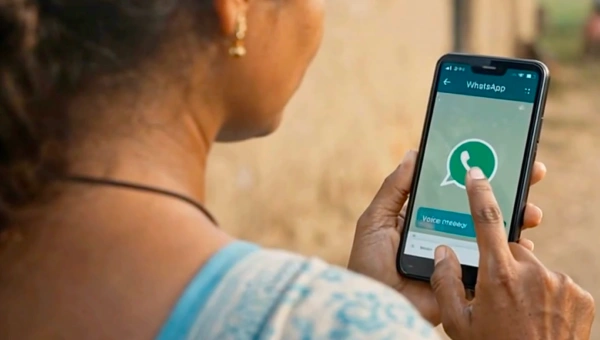
SNEHA developed a GenAI-enabled WhatsApp chatbot, ‘Phonewali SNEHA Didi’, to provide women with personalised maternal and child health information. The solution delivers voice- and text-based guidance, behavioural nudges, and two-way interaction with human-in-the-loop support, ensuring privacy, contextual relevance, and 24×7 access to trusted health information.
Key challenges faced by women in urban informal settlements included:
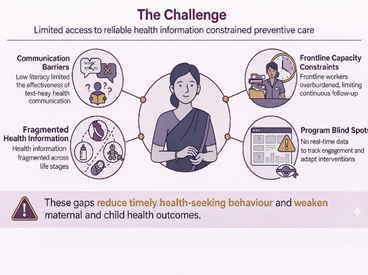
These constraints reduce timely health-seeking behaviour and weaken the effectiveness of maternal and child health programs.
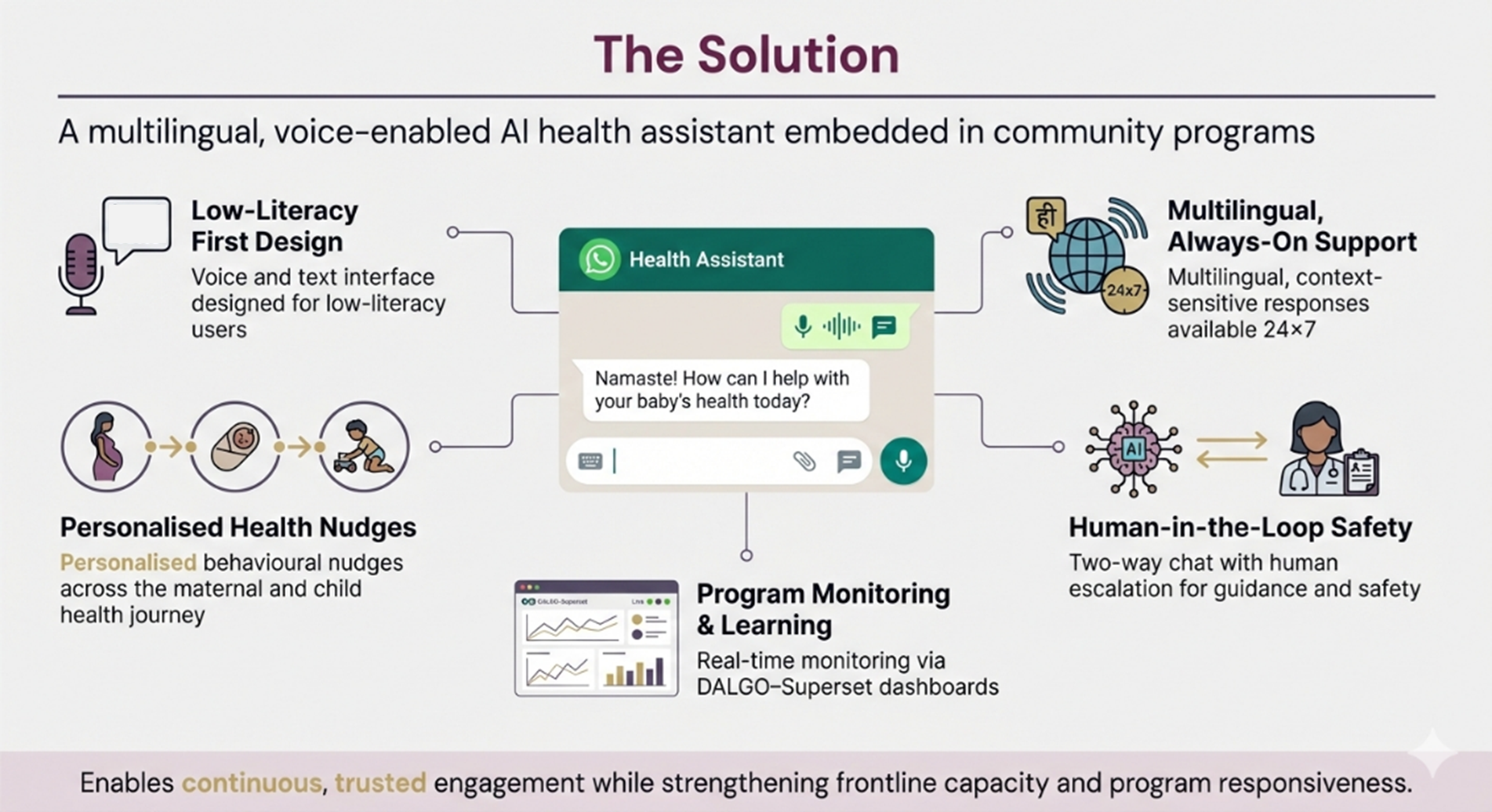
SNEHA transitioned its chatbot from a menu-based system to a GenAI-enabled, voice-and-text WhatsApp assistant. The chatbot provides personalised nudges aligned to pregnancy stage, immunisation schedules, and child health milestones.
Key features of the solution include:
- Voice and text interface designed for low-literacy users
- Multilingual, context-sensitive responses available 24×7
- Personalised behavioural nudges across the maternal and child health journey
- Two-way chat with human-in-the-loop escalation for guidance and safety
- Dashboard-driven monitoring using DALGO–Superset for real-time insights
Technology Stack
| Tools/ Techniques | Used For | What It Enabled | Category |
|---|---|---|---|
| Glific | WhatsApp chatbot to run community programmes | Two-way, low-barrier health communication | Open Source |
| OpenAI | Health content delivery with LLM integration | Personalised responses and multilingual guidance | Commercial |
| NLP & LLM Fine-tuning | Chatbot logic | Contextual, health-stage-aligned nudges | Commercial |
| DALGO | Dashboards for program monitoring | Real-time analytics and engagement tracking | Open Source |
| Apache Superset | Dashboards for program monitoring | Real-time analytics and engagement tracking | Open Source |
| CommCare | Health worker systems | Data flow from community onboarding | Commercial |
| BigQuery | Data storage and analysis using PostgreSQL | Secure, scalable data management | Commercial |
Key Project Learnings
Delivering health guidance through WhatsApp and voice interfaces reduced literacy barriers and led to sustained interaction with the chatbot.
Stage-specific nudges and contextual responses reinforced key health practices, supporting improvements in care-seeking behaviours.
Real-time dashboards allowed teams to adapt content and outreach strategies, improving relevance and engagement over time.
Potential for Wider Adoption
| Sector | Adaptability of the Solution |
| Public Health Systems | Can integrate with government platforms for digital health outreach |
See it in Action
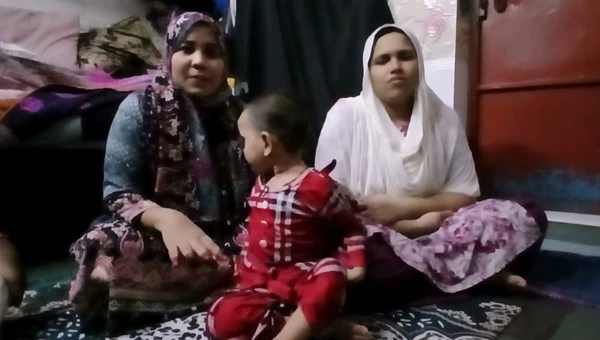
This video shares the experience of a family navigating pregnancy with the support of a local health worker and a mobile-based AI assistant. It demonstrates how timely guidance on nutrition, medical care, hospital delivery, and vaccinations is delivered through continuous support, helping families resolve doubts, make informed decisions, and ensure safer maternal and child health outcomes.

This video introduces the SNHA WhatsApp chatbot, designed to provide 24/7 reliable maternal health information to women in underserved communities. It demonstrates how users can ask questions through text or audio in local languages and receive instant responses, supported by community volunteers who facilitate adoption. The video also highlights the pilot’s scale and its goal of building a replicable model for accessible, technology-enabled healthcare support.