
Digital Toolbook for Social Impact

Powering the social sector with digital intelligence.

A curated platform bringing together real-world case studies, digital tools, solution providers, and learning resources so your organisation can make informed technology decisions and amplify its social impact.

Digital & AI in Action: Stories from the Ground

Real-world transformation success stories from social purpose organisations using AI and digital tools to scale their impact.
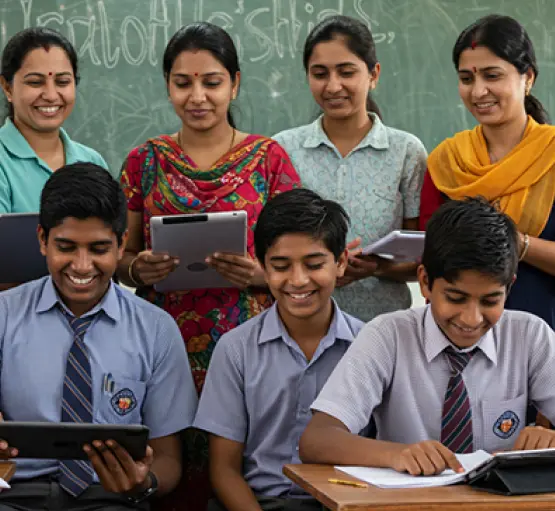
I-Saksham education NGO using AI tools and MIS platform to improve mentoring and monitoring in rural Bihar
Education Workforce Enablement

I-Saksham used AI-assisted coaching and a custom MIS to scale peer mentoring and cut feedback delays across its fellowship programme in Bihar.

I-Saksham Educational & Research Foundation

What changed ?
AI tools replaced a manual, time-intensive feedback process, enabling buddies to support more fellows, reducing per-fellow mentoring costs by 17%, and cutting feedback turnaround from 30 days to near real-time.
50% increase in mentoring coverage
Read case study Read case study
Healthcare User Engagement

FMCH built NuTree, a mobile app with protocol-based workflows and intelligent scheduling, to standardise nutrition care and reduce missed visits for high-risk mothers and children.

3x Increase In Families Reached.
Read case study Read case study
Education

Educate Girls used a machine learning model to predict village-level need and shift from blanket outreach to precision targeting for out-of-school girl enrolment.
1.56 milliongirls enrolled in just 6 years
Read case study Read case study
Adalat AI: AI-Enabled Courtroom Operations Accelerating Justice Delivery
Anudip Foundation: Bridging the Skills Gap through an Agentic AI Learning Ecosystem
ARMMAN: AI-Enabled Support for High-Risk Pregnancy Care
Civic Innovation Foundation: Digitising Public Consultation for Democratic Governance
Farmers for Forest: Smart Stack Enables Agroforestry Scale
I-Stem: Dismantling the Digital Apartheid for People with Disabilities
Khan Academy
Magic Bus India Foundation: Democratizing Personalized Skilling through Magic AI
NudgED Trust: Reimagining Early Education through AI-Powered Parental Engagement
I-Saksham: Scaling Grassroot Leadership with Purpose Built AI
The Association of People with Disability (APD) + AI-Powered Universal Accessibility
Vruksh Ecosystem Foundation: Bridging the Digital Divide with Offline-First Agentic AI
Best Program Management Digital Transformation Case Study - Haqdarshak
SNEHA: AI-Enabled Maternal & Child Health Information Access
Rocket Learning: AI Powered Worksheet Autocorrection for Early Learning
Vowels of the People Association (VOPA): AI & Evidence-based FLN Assessments

Find a technology partner that understands your context

Solution providers with proven track record of designing, building and implementing scaled technology solutions for nonprofits.

AI & Data Science Solutions
Kenpath Technologies

Builds multilingual and accessible AI-powered solutions across agriculture, education, disability inclusion, and climate resilience, with a focus on low-literacy and frontline contexts.

View Provider View Provider

Digital Strategy & Transformation
SynergyConnect

Provides digital platforms for nonprofits and CSR foundations to streamline programme management, reporting, stakeholder coordination, and operational workflows.

View Provider View Provider

Data Management & Analytics
Dhwani Rural Information Systems

Designs and implements technology solutions for rural and development sector organisations, including programme management systems, data platforms, and MIS tools.

View Provider View Provider

The right tool for every function

Software tools for Social Purpose Organisations, organised by function to support fundraising, project management, data collection, monitoring, evaluation, impact measurement, assessed for accessibility, cost, and social sector fit.

Build your team's digital capability

Learning pathways for social sector professionals - filter by skill, topic, and platform to find courses aligned with your organisation's digital goals.

Design thinking course for social sector innovation India
Product & Innovation

Design Thinking for the Greater Good

Introduces design thinking approaches for the social sector, including stakeholder engagement, prototyping, testing, and human-centred problem solving.

View Course  View Course

AI for social impact course for NGOs and nonprofits India
Artificial Intelligence

Introduction to artificial intelligence

Introduces foundational AI concepts, including machine learning, generative AI, neural networks, and responsible AI practices for non-technical learners.

View Course  View Course

Data and analytics training for NGO M&E professionals
Data & Analytics

Introduction to data analytics

Introduces foundational data analytics concepts, including data workflows, structures, visualisation, and analytical tools used in data-driven environments.

View Course  View Course

Digital literacy course for nonprofit teams in India
Professional Skills

Agile project management

Practical introduction to Agile and Scrum methodologies, covering sprint planning, backlog management, retrospectives, and collaborative project workflows.

View Course View Course
Find answer for your role

Browse FAQs tailored to how you work in the social sector

Program Manager
DT4SI's Digital Tools section curates software across 8 functions, from field data collection to project management. Each tool is assessed for social sector fit, offline capability, and affordability. Start by browsing the Field Data Collection and M&E categories, which are most relevant to program delivery.
Yes, DT4SI's Case Studies section features real implementation stories from Indian NGOs across health, education, and livelihoods. Each case study includes what changed, what tools were used, and measurable outcomes. I-Saksham and Educate Girls are strong references for education-focused program managers.
Yes. Many tools featured on DT4SI are designed for low-literacy frontline contexts, including voice-enabled, offline-capable, and vernacular-language interfaces. Solution providers like Kenpath Technologies specialise specifically in last-mile, low-literacy digital deployments.
Timelines vary by scope and readiness. Small NGOs using low-code platforms like Zoho can often set up basic monitoring in 4-8 weeks. Larger MIS implementations typically take 3-6 months. DT4SI's case studies provide real benchmarks from organisations like I-Saksham, who have gone through this journey.
DT4SI is a free platform all case studies, tool listings, and course resources are openly available. The platform is designed to help social sector organisations make informed technology decisions without consulting fees. Use the FAQ and Insights sections to start, then explore the Solution Providers directory when you're ready for implementation support.
M&E Professional
DT4SI's Field Data Collection category reviews tools like KoboToolbox, ODK, and CommCare all widely used in India's development sector. Each listing covers offline capability, form logic, aggregation dashboards, and cost. KoboToolbox is particularly popular among Indian NGOs for its free tier and humanitarian-sector support.
Several low-code tools reviewed on DT4SI, including Google Looker Studio, Power BI (free for nonprofits), and Zoho Analytics allow M&E professionals to build live dashboards without coding. DT4SI's Data for Impact course also covers how to set these up step by step.
All three are open-standard mobile data collection platforms popular in India. KoboToolbox is free and widely supported by humanitarian agencies. ODK is highly customisable and developer-friendly. CommCare offers stronger case management features suited to longitudinal beneficiary tracking. DT4SI's Digital Tools section provides a detailed comparison.
DT4SI case studies, particularly Educate Girls - cover how they used mobile data tools with form validation, mandatory field logic, and supervisor review workflows to maintain data quality at scale. The platform's Digital Tools section also flags which tools include built-in quality control features.
DT4SI's Data for Impact course covers MEAL framework design as its first module before tool selection. The Insights section also includes practitioner articles on designing M&E systems for the Indian development context. Start with the course, then use the tools directory to match your framework to software.
CSR Manager
DT4SI's case studies provide a benchmark for what 'digitally mature' looks like in India's social sector from basic mobile data collection to real-time dashboards and AI-assisted program delivery. The platform also helps funders understand the spectrum from paper-based to fully digitised operations.
Yes, DT4SI's case studies provide documented examples. Educate Girls enrolled 1.56 million girls using mobile-based M&E tools. FMCH tripled families reached after integrating digital health dashboards. These are not pilot studies, they represent outcomes at scale in Indian contexts.
Yes, and increasingly CSR strategies in India are explicitly including capacity building including digital capacity as a fundable category under Schedule VII. DT4SI's Insights article 'How Indian NGOs Can Fund Their Digital Transformation' covers this in detail, including how to structure digital transformation grants.
DT4SI's Solution Providers directory features technology vendors with proven track records in India's social sector including Dhwani Rural Information Systems (MIS and data platforms), Edzola Technologies (low-code Zoho implementations), and Kenpath Technologies (AI and voice solutions for last-mile contexts).
DT4SI's case studies are tagged by technology type, sector, and outcome so funders can compare approaches across organisations. The platform is developing a Digital Maturity Framework for Indian NGOs, check the Insights section for the latest publication.
Implementation Partner
DT4SI curates solution providers based on proven social sector experience, implementation track record, and client references from Indian NGOs. If your organisation meets these criteria, use the submission form on the platform to apply for listing. All providers are reviewed by the DT4SI editorial team.
Dhwani Rural Information Systems, Salesforce Nonprofit (with local implementation partners), and custom-built platforms on low-code tools like Zoho and Mendix are among the most commonly deployed in India. DT4SI's Solution Providers and Digital Tools sections cover all of these with evaluation criteria.
DT4SI's Insights section covers cost frameworks for digital transformation at different NGO scales from small organisations using free tools to large multi-state NGOs building custom MIS. The article 'Digital Transformation for Indian Nonprofits: Achieving Scale with Limited Resources' is a good starting point.
Based on DT4SI's case study library, education and community health NGOs in India have the highest digital tool adoption driven by strong M&E requirements from international donors. Livelihoods and rural development organisations are earlier in the adoption curve but growing rapidly.
DT4SI's case studies are published for sector-wide learning. You are welcome to reference and link to them in client presentations and proposals. For direct reproduction, please attribute DT4SI and check the platform's terms of use.
Nonprofit Leader
DT4SI recommends starting with the problem, not the tool. Use the platform's case studies to see how organisations similar to yours have framed their digital challenges, then use the Digital Tools section to shortlist options by function. The Digital Foundations course is also a structured starting point for leadership teams.
DT4SI's case studies provide the evidence base, including quantified outcomes like 1.56 million girls reached (Educate Girls) and 3x families served (FMCH). The Insights article 'How Indian NGOs Can Fund Their Digital Transformation' also covers how to frame tech investment in board and funder conversations.
Sources include CSR grants (increasingly technology-inclusive under Schedule VII), international foundation grants with a capacity-building component, government programs, and internal reserves. DT4SI's conversation with Chetan Kapoor and Ashwin Iyer covers this in depth, find it in the Insights section.
For basic digitisation (mobile data collection, WhatsApp-replaced by a structured tool), 2-3 months is achievable. For a full MIS with dashboards and automated reporting, plan for 6-12 months. DT4SI's case studies include honest accounts of timelines, challenges, and what to expect at each stage.
DT4SI's Solution Providers directory evaluates vendors specifically for social sector fit, not just technical capability. Look for partners with NGO implementation references, experience in your geography and sector, and realistic change management support. Ask to speak with existing nonprofit clients before signing.

The information provided here is created as a community resource and is not intended as professional advice or a recommendation by ILSS or Koita Foundation. While we strive to ensure the accuracy of the content, we do not take responsibility for any errors or omissions. Users should use their own discretion before making any decisions based on this information. ILSS or Koita Foundation assume no liability for any actions taken based on the information provided.