
The Association of People with Disability (APD) + AI-Powered Universal Accessibility
Crowdsourcing a barrier-free India through AI-driven accessibility audits and real-time mapping.



 + AI-Powered Universal Accessibility.webp)
Watch the story in 60 seconds (AI-generated video; visuals are illustrative)
Case at a Glance
The Association of People with Disability (APD), founded in 1959, is an organisation dedicated to creating an inclusive ecosystem for persons with disabilities. Using a life-cycle approach, APD provides comprehensive rehabilitation, education, and advocacy services to ensure equity, dignity, and justice for over one million beneficiaries across India.
Public infrastructure in India remains largely inaccessible, yet traditional expert-led audits are costly, slow, and unscalable. With over 2.1% of the population identifying as disabled, the lack of real-time accessibility data prevents millions from participating equally in education, healthcare, and employment, reinforcing systemic exclusion and loss of dignity.
The "Yes to Access" (YTA) mobile app democratizes audits by combining AI-powered computer vision with crowdsourced volunteer data. Users capture photos of public spaces; AI models then analyse parameters like ramps and signage to generate instant accessibility ratings, populating an interactive map for easy navigation by PwDs and caregivers.
India faces a systemic gap between legislative mandates for universal access (RPWD Act 2016) and the lived reality of its citizens. While policies exist, the primary barrier to change is the lack of actionable data. Traditional accessibility audits are inherently resource-intensive, requiring specialised experts to manually assess architectural barriers. This centralised approach makes it impossible to audit the millions of public buildings, transit hubs, and digital platforms across India’s vast geography.
Consequently, NGOs and government bodies lack the capacity to identify specific infrastructure gaps at scale. For persons with disabilities (PwDs), elderly individuals, and those with temporary mobility issues, the absence of reliable, real-time information leads to a ‘navigation lottery’, where everyday errands become logistical hurdles. Without a decentralised, low-cost way to track accessibility, infrastructure remains static, and the goal of a barrier-free India by 2030 remains out of reach.
APD’s ‘Yes to Access’ initiative shifts the auditing paradigm from expert-led to community-driven. By embedding expert knowledge into a mobile interface, the solution enables any citizen with a smartphone to conduct a professional-grade audit.
The Audit Ecosystem:
- Crowdsourced Capturing: Volunteers use a mobile-first interface (built with React Native) to photograph 14 types of locations. The process is optimised for speed, with quick checks taking just 2 minutes and full building audits averaging 25 minutes.
- AI-Powered Analysis: The system utilises the ‘SquirrelVision’ inference engine, employing TensorFlow and PyTorch models to analyse images against 29 distinct parameters. It automatically detects and evaluates features such as ramp slopes, tactile paths, door widths, and sink heights.
- Interactive Accessibility Mapping: Once verified, data is pushed to an interactive map that connects with Google Maps. This provides PwDs and caregivers with real-time accessibility ratings and individual parameter scores for informed navigation.
The rollout followed a strategic evolution from a 2021 study of municipal barriers in Karnataka to a formal national launch in July 2024, leading to a rolling out in December 2024.. The strategy focuses on ‘Open Access’ principles, ensuring the technology backbone is adaptable for governmental integration and is envisioned for internationalisation.
The transformation driven by YTA is visible across scale, adoption, and policy influence. By July 2025, the platform had achieved national reach, completing nearly 194,000audits. In November 2025, the platform crossed 200,000 audits. Although it is not a comprehensive full audit, this volume of data would have taken decades to collect via traditional expert methods, and at the same time it gives the understanding of which spaces are accessible for a person with disability, older persons, pregnant women and other persons with limited mobility challenges to enter.
Key Impact Areas:
Technology Stack
| Tools/ Techniques | Used For | What It Enabled | Category |
|---|---|---|---|
| SquirrelVision | Back-end / AI engine | Computer vision for automated image analysis of 29 parameters. | Custom-built |
| TensorFlow / PyTorch | AI/ML layer | Frameworks for training models to recognise ramps, slopes, etc. | Open Source |
| React Native | Front-end | Cross-platform mobile app for volunteer data capture. | Open Source |
| Kafka | Messaging | High-volume event streaming and data processing. | Open Source |
| PostgreSQL 16 | Data layer | Relational database for structured audit data and scores. | Open Source |
| Google Cloud Platform (GCP) | Infrastructure | Hosting services (GKE, VPC, Cloud Storage) for scalability. | Commercial |
Key Project Learnings
AI should be positioned as an ‘Expert in an App’, allowing non-specialist volunteers to perform complex technical tasks, which is the only way to achieve national-level scale in the social sector.
Success in digital transformation requires a ‘Partnership Framework’ combining nonprofit mission, private-sector tech expertise, and government policy alignment to move from a ‘pilot’ to a ‘movement.’
For a solution targeting accessibility, the tool itself must be accessible, run on low-end devices, and accommodate real-world capture conditions to ensure maximum volunteer participation.
Potential for Wider Adoption
| Sector | Adaptability of the Solution |
| Government | High: Can be integrated into Urban Development departments to monitor compliance with accessibility laws and prioritise infrastructure spend. |
| NGO Ecosystems | High: Replicable for other audit-heavy sectors (e.g., sanitation, environmental monitoring) where manual inspections are currently unscalable. |
| Smart Cities | High: The open-access map data can serve as a foundational layer for smart city navigation and inclusive tourism initiatives globally. |
See it in Action
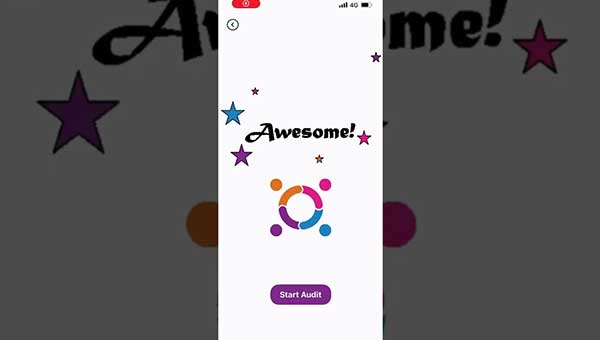
This tutorial demonstrates the Yes to Access app, showing how users utilize AI and manual inputs to audit public accessibility.