
I-Stem: Dismantling the "Digital Apartheid" for People with Disabilities
I-Stem is revolutionizing accessibility in India by deploying "NClude"—an AI-powered multimodal ecosystem that converts inaccessible content into accessible formats, automates complex digital tasks, and provides personalized career coaching for the 20 million+ people with disabilities (PWDs) in the country.


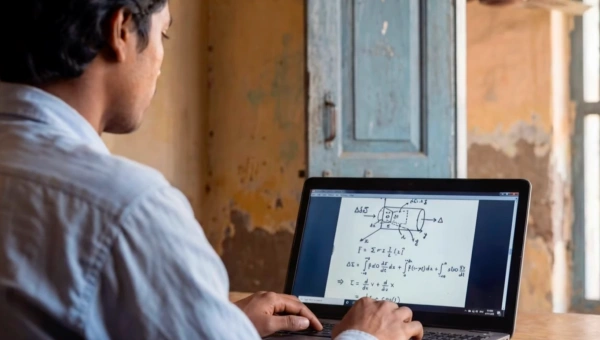
Watch the story in 60 seconds (AI-generated video; visuals are illustrative)
Case at a Glance
I-Stem was born from the lived experience of its co-founders, including Kartik Sawhney, who was famously denied the right to study science in India due to his blindness. The organization moves beyond "volunteer-based models" to create robust, AI-driven technical infrastructure that restores agency to PWDs.
India faces a "Digital Apartheid" where 96% of digital content—textbooks, government forms, and job portals—is incompatible with screen readers or assistive tech. This "book famine" results in only 4% of PWDs graduating university and millions remaining unemployed, trapped in a cycle of poverty and dependency.
"NClude" is a multimodal AI platform accessible via Web, WhatsApp, and IVR. It uses custom computer vision to parse complex document layouts (like Math/STEM), Agentic RAG for career coaching grounded in disability-specific data, and browser automation to help users navigate and fill out otherwise inaccessible digital forms.
For a person with a disability in India, the internet is often a series of "dead ends." Most websites and documents are designed without accessibility standards (WCAG), meaning screen readers cannot "read" them. This is particularly acute in STEM (Science, Technology, Engineering, and Math), where complex formulas and diagrams are completely invisible to standard assistive tools.
Traditional solutions have relied on human volunteers to read books or intermediaries to fill out forms. These models are not only unscalable but also strip PWDs of their dignity and autonomy. When a job application portal is inaccessible, a PWD cannot apply independently, effectively barring them from the modern economy.
I-Stem’s "NClude" platform is designed to act as a digital bridge, providing real-time, high-fidelity accessibility.
Key AI Modules:
- Accessibility Conversion: Uses custom-trained computer vision models and OCR to parse document layouts. Unlike standard OCR, NClude can interpret STEM content, tables, and complex formatting, converting them into high-quality accessible HTML or text.
- Task Completion Agent: This module uses "Agentic AI" (Puppeteer/Selenium combined with LLMs) to navigate inaccessible UIs. A user can talk to the bot in their regional language to "Apply for this job" or "Fill this government form," and the agent completes the technical actions on the backend.
- Career Discovery & ITutor: Powered by fine-tuned LLMs (like Llama) grounded in disability-specific datasets, the platform provides career coaching that understands the unique barriers PWDs face, offering pathways based on successful professionals with similar disabilities.
- Multimodal Reach: Recognizing the digital divide, NClude is available on WhatsApp and IVR, ensuring that users with basic phones or low-data connectivity can still access information through voice-to-voice interaction.
I-Stem has successfully moved from an experimental tool to a core component of India's national accessibility infrastructure.
Technology Stack
| Tools/ Techniques | Used For | What It Enabled | Category |
|---|---|---|---|
| Custom Computer Vision | Content Conversion | High-fidelity parsing of STEM and complex layouts | Custom-built |
| Llama (LLM Integration) | Career & Task Agents | Reasoning, career coaching, and conversational AI | Open Source |
| Puppeteer / Selenium | Task Automation | Navigation of inaccessible web forms and portals | Open Source |
| Livekit | Audio / Voice | Real-time, low-latency speech-to-speech interactions | Open Source |
| Amazon Web Services | Containerization and Infrastructure | Scalable, secure cloud hosting with REST API access | Commercial |
| Bhashini | Localization | Multilingual support for Indian regional languages | Open Source |
Key Project Learnings
AI’s greatest value is not "helping" PWDs, but providing the tools for them to help themselves—moving from human intermediaries to autonomous digital agents.
Standard AI tools often fail at math and diagrams; custom computer vision models trained on academic layouts are essential for true educational inclusion.
Integrating with government platforms (Sugamya Bharat) and national libraries (Sugamya Pustakalaya) is faster and more effective than building an isolated user base from scratch.
Potential for Wider Adoption
| Sector | Adaptability of the Solution |
| Government (E-Governance) | High. Can be used to make all government portals (banking, taxes, schemes) accessible without needing to redesign the underlying legacy code. |
| Higher Education | High. Universities can deploy NClude to ensure all library resources and LMS content are automatically accessible to students with disabilities. |
| Corporate HR | High. Companies can integrate the Task Completion Agent into their hiring portals to ensure they are inclusive of diverse talent. |
See it in Action
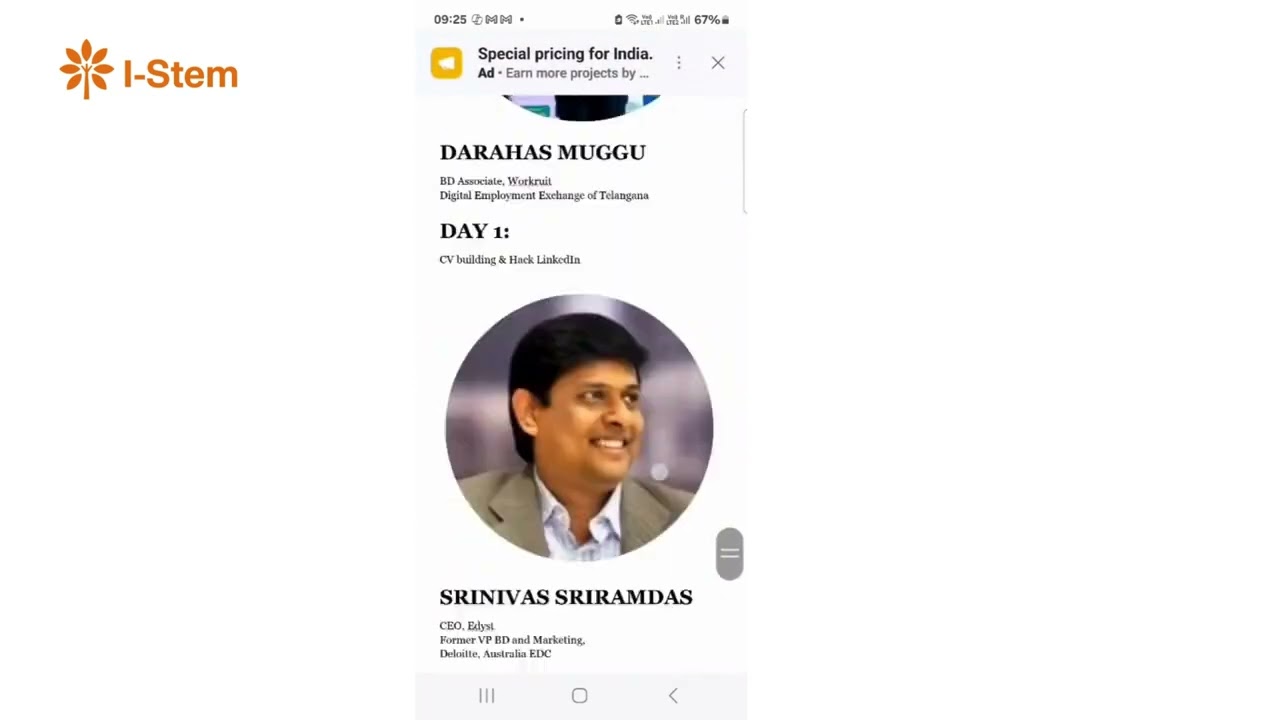
In this video, get to know how NClude reimagines accessibility by integrating WhatsApp-based career guidance, accessible documents, job discovery, and AI-assisted applications into a unified ecosystem, reducing digital friction and empowering persons with disabilities to navigate opportunities with confidence.