
Vruksh Ecosystem Foundation: Bridging the Digital Divide with Offline-First Agentic AI
Vruksh Ecosystem Foundation is democratising high-quality education in connectivity-challenged regions by deploying a multi-model AI architecture that transitions seamlessly between high-capability cloud models and efficient edge-based offline learning.



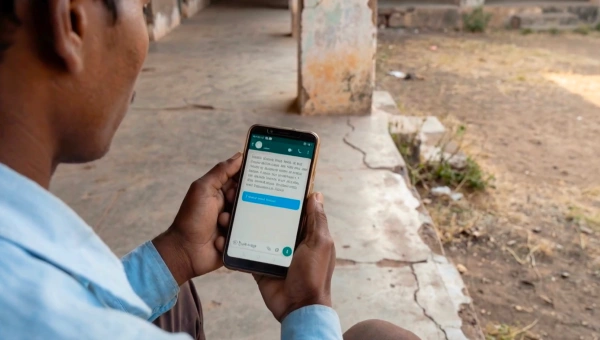
Watch the story in 60 seconds (AI-generated video; visuals are illustrative)
Case at a Glance
Vruksh Ecosystem Foundation (VEF) functions as a catalyst for socio-economic growth. By integrating technology into grassroots learning, VEF empowers students and entrepreneurs in underserved regions, providing them with the digital tools and knowledge necessary to participate in the modern economy.
In many parts of India, a ‘digital chasm’ persists due to inconsistent internet connectivity and a lack of personalised educational support. Traditional e-learning platforms fail when bandwidth drops, and standard curricula are often not tailored to the specific needs or local contexts of rural learners.
Through the Ekatra platform, VEF has deployed a hybrid AI architecture. It utilises Meta Llama 3.2 90B for complex, vision-powered Q&A when online, and automatically switches to a local Llama 3.2 1B model for offline inference, ensuring that learning never stops, regardless of the signal strength.
The primary barrier to digital education in rural India is not just the lack of hardware, but the inconsistency of infrastructure. While 4G and 5G expand, ‘dead zones’ remain where high-bandwidth AI tools cannot function. This results in a fragmented learning experience where students in urban centres benefit from advanced AI tutors, while rural students remain tethered to static, offline text or no resources at all.
Furthermore, there is a systemic lack of hyper-personalised content. Standard educational materials from NCERT or NPTEL are vast but often require a teacher to interpret and adapt them for struggling students. Without an ‘always-on’ personalised coach, the gap between high-performing and marginalised students continues to widen, exacerbated by the lack of human trainers in remote areas.
VEF’s solution, Ekatra, leverages an Agentic AI framework designed to be resilient, modular, and context-aware.
Technical Architecture & Modes:
- Online Mode (High Reasoning): Utilising Meta Llama 3.2 90B Vision, the platform handles complex student queries, vision-based problem solving (e.g., analysing a photo of a math problem), and generates personalised course structures in real-time.
- Offline-First Mode (Edge AI): For areas with zero connectivity, the system utilises Llama 3.2 1B for local inference. This smaller, efficient model runs directly on the device or a local edge server, providing instant feedback without requiring a data packet to reach the cloud.
- Fine-Tuned Expertise: VEF custom-trained a Llama 3.1 8B model on a curated dataset of over 20,000 rows of educational content from NCERT and NPTEL, ensuring that the AI’s pedagogical tone and factual accuracy are aligned with national standards.
Implementation Strategy: The solution is delivered primarily via WhatsApp Business API, meeting students on a platform they already use. It simulates a structured classroom environment where AI-generated materials are pushed to learners based on their specific progress and performance markers.
Ekatra uses ‘Conversational Microlearning’ to break down complex business concepts into highly digestible 3-5-minute WhatsApp conversations. Its multilingual intelligence automatically delivers content in Hindi, Marathi, or English without the need for manual recreation.
The transition to an offline-capable AI model has fundamentally changed the reliability of digital learning in VEF’s target regions.
Technology Stack
| Tools/ Techniques | Used For | What It Enabled | Category |
|---|---|---|---|
| Meta Llama 3.2 90B | Cloud-based learning | Complex reasoning and vision-powered Q&A (Online) | Open Source (Weights) |
| Llama 3.2 1B | Edge/Offline inference | Instant feedback and tutoring without internet access | Open Source (Weights) |
| Llama 3.1 8B | Custom tutoring | Fine-tuned on NCERT/NPTEL data for domain expertise | Open Source (Weights) |
| Communication | Familiar, low-friction interface for learner engagement | Commercial | |
| HuggingFace | Model hosting/data | Repository for fine-tuned educational datasets | Open Source |
| Docker / venv | Deployment | Secure, sandboxed environments for offline edge models | Open Source |
Key Project Learnings
AI solutions for the social sector must be ‘offline-first’ to ensure that the most marginalised learners aren't excluded during connectivity outages.
Fine-tuning a smaller model (8B) on high-quality, verified educational data (NCERT) often yields more reliable results than a generic larger model for specific pedagogical tasks.
Designing a system that switches between cloud and edge models ensures that the user never encounters a loading error, maintaining the flow of learning.
Potential for Wider Adoption
| Sector | Adaptability of the Solution |
| Government (Rural Education) | High. The hybrid architecture is perfect for state-led digital missions in areas where the National Optical Fibre Network (NOFN) is yet to reach. |
| Social Purpose Organisations (On-field Training) | High. Useful for training frontline workers (ASHA/Anganwadi) in remote areas where they need instant, offline access to medical or procedural SOPs. |
| Ecosystems (B2B SaaS) | High. The Ekatra model of subscription- and usage-based pricing for AI content enables other social enterprises to scale their own micro-learning programs. |
See it in Action
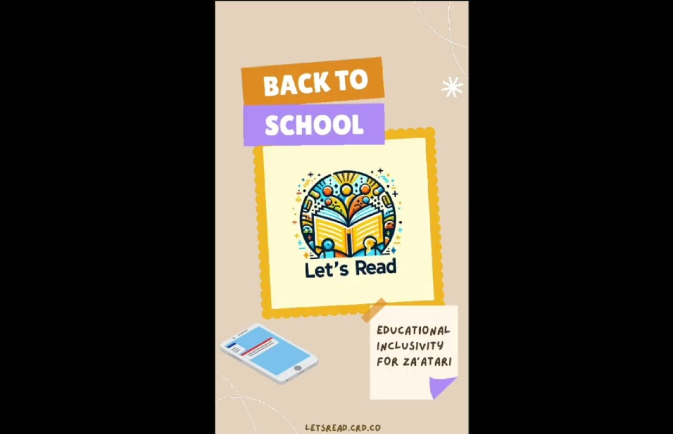
This video introduces you to Let’s Read on Ekatra, an AI-powered educational platform that delivers personalised learning through WhatsApp and offline access, enabling students in resource-constrained environments to learn, explore topics, and build understanding in their preferred language.