
WhatsApp

Messaging and communication channel for NGOs & SPOs

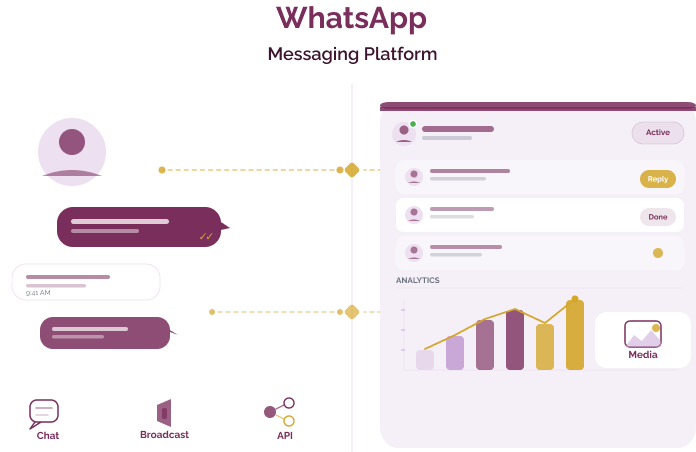
WhatsApp is a widely used messaging platform that enables organisations to communicate and engage with users through chat-based interactions. Through the WhatsApp Business app and API, organisations can manage conversations, send updates, and build structured communication workflows.
WhatsApp

Communication challenges for nonprofits & social purpose organisations

Challenge
check

Reaching beneficiaries consistently across geographies can be difficult, especially when communication is fragmented across multiple channels.

check

Scaling two-way engagement requires significant manual effort, while traditional tools offer limited interactivity and tracking.

Solution
check

Platforms like WhatsApp enable direct, real-time communication, supporting both one-way updates and structured two-way engagement.

Key capabilities of WhatsApp

Direct messaging

Enables one-to-one communication in real time between organisations and beneficiaries.

Broadcast messaging

Supports sending updates and reminders to multiple users simultaneously for programme communication.

Two-way interaction

Allows users to respond, ask questions, and engage in ongoing communication flows.

Media sharing

Supports images, documents, videos, and voice notes to enable richer communication.

Group communication

Enables community-based engagement through group interactions and discussions.

API-based integration

Supports automation through chatbot workflows and integrations with external systems via providers.

Also requires pre-approved message templates for outbound communication beyond the 24-hour response window.

Language

Supports multiple languages, enabling communication in local and regional contexts across diverse user groups.

Pricing for nonprofits

WhatsApp itself is free to use via the Business app, while API-based usage involves costs based on messaging and integrations.

WhatsApp Business app

Free to use for basic messaging and broadcast communication.

Suitable for small teams with limited automation needs.

WhatsApp Business API

Usage-based pricing based on messages and templates rather than conversations.

Charges vary by message type, geography, and provider, and enable automation and integrations at scale.

Advanced usage

Additional costs may include platform fees, integrations, and automation tools.

Pricing varies depending on provider, usage volume, and feature requirements.

Best suited for which nonprofits

The right WhatsApp pathway depends on your organisation’s scale, technical capacity, and communication objectives.

Small teams and field programmes (Business app)

Suited for organisations with a small, defined group of beneficiaries where direct, manual communication is sufficient.

Typically used for updates, reminders, and ongoing beneficiary communication without automation.

Mid-size programmes (API via platforms like Glific and WATI)

Suited for structured programmes such as health, education, or livelihoods with recurring communication needs.

Enables automated reminders, follow-ups, and engagement workflows at scale.

Large organisations and networks (API with integrations)

Suited for organisations managing communication across large or distributed beneficiary groups.

Typically integrated with CRM, programme, or monitoring systems for workflow-based communication.

Not recommended when

Less suitable for programmes handling highly sensitive beneficiary data without clear governance practices.

Also not ideal where smartphone or internet access is limited, or where teams cannot manage API setup and templates.

Frequently Asked Questions

What is WhatsApp used for in nonprofits?

<p>Used for communication, engagement, and service delivery through messaging, including reminders, onboarding flows, helplines, and ongoing programme communication.</p> <p>It supports beneficiary engagement across programme lifecycles, from enrolment to follow-ups and feedback collection.</p>

Can WhatsApp be used for surveys or data collection?

Yes, it supports feedback collection and simple surveys. For advanced use cases, organisations often integrate it with tools such as KoboToolbox or SurveyCTO.

Does WhatsApp require technical setup?

The Business app does not require technical setup. API-based usage requires onboarding through providers such as Gupshup or WATI.

What is the difference between the app and API?

The app supports basic communication, while the API enables automation, integrations, and communication at scale.

What are message templates and why are they required?

For outbound messages beyond a 24-hour response window, WhatsApp requires pre-approved templates that must be submitted and approved before use.

Is it suitable for rural India?

Yes, especially where smartphone and WhatsApp adoption is high. In low-connectivity areas, organisations often complement it with SMS or IVR.

Is it compliant for handling beneficiary data?

Messages are end-to-end encrypted, but organisations should assess privacy implications and comply with regulations such as the Digital Personal Data Protection Act when handling sensitive data.

Want to learn more?

The information provided here is created as a community resource and is not intended as professional advice or a recommendation by ILSS or Koita Foundation. While we strive to ensure the accuracy of the content, we do not take responsibility for any errors or omissions. Users should use their own discretion before making any decisions based on this information. ILSS or Koita Foundation assume no liability for any actions taken based on the information provided.