
ARMMAN: AI-Enabled Support for High-Risk Pregnancy Care
Strengthening Frontline Health Worker Capacity to Reduce Maternal and Neonatal Mortality


Watch the story in 60 seconds (AI-generated video; visuals are illustrative)
Case at a Glance
ARMMAN is a nonprofit organisation working to reduce preventable maternal and child mortality by addressing delays in care-seeking, limited access to quality health services, and gaps in frontline health worker training. Through a blended tech-plus-touch model integrated with government systems, ARMMAN delivers scalable mHealth programs while strengthening frontline capacity.
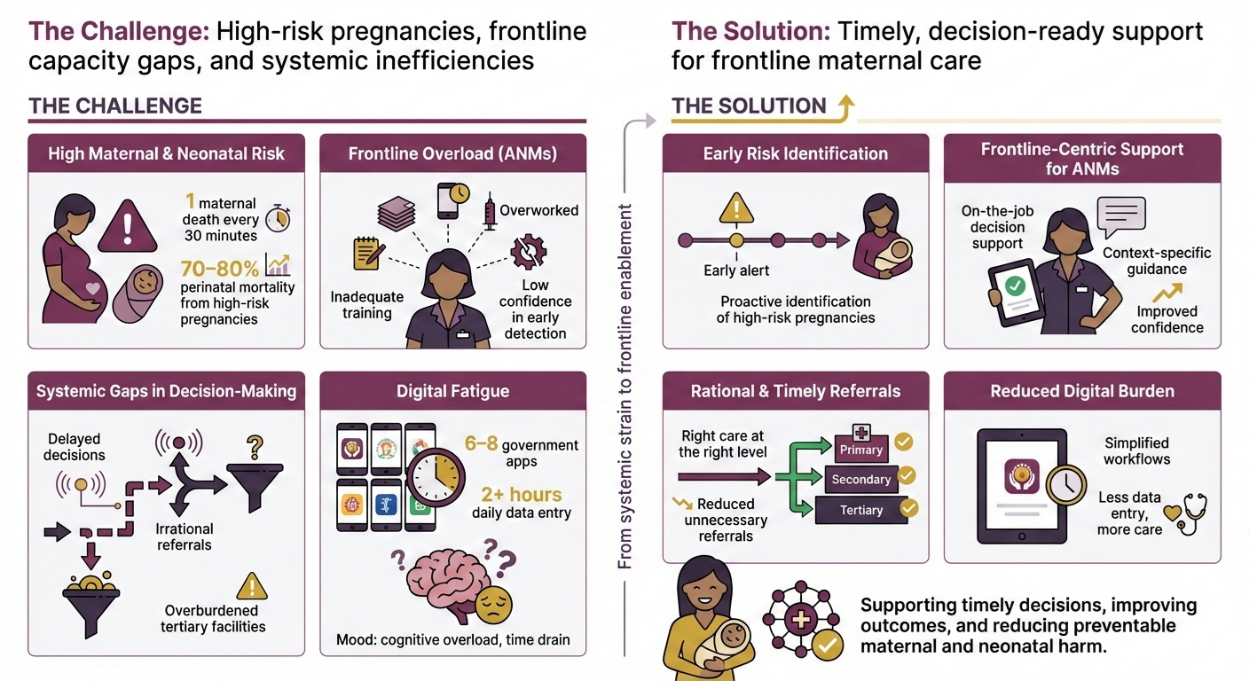
High-risk pregnancies account for 20–30% of all pregnancies in India but contribute to 70–80% of maternal and neonatal deaths, largely due to poor early identification and management. Frontline health workers are overburdened, undertrained, and lack timely, context-specific guidance, while infrequent trainings and digital fatigue from multiple tools hinder effective care.
ARMMAN developed a multilingual, multimodal AI assistant for Auxiliary Nurse-Midwives, delivered via WhatsApp. The solution provides real-time, protocol-aligned clinical guidance, doubt resolution, and bite-sized learning, supported by a human-in-the-loop escalation pathway to ensure safety, accuracy, and contextual relevance.
A woman dies due to childbirth-related complications every 30 minutes in India, and for every maternal death, 20 more women suffer lifelong complications. Over 19,000 women die annually, largely from preventable causes. High-risk pregnancies, which constitute 20–30% of all pregnancies, account for 70–80% of perinatal mortality and morbidity, including poor neonatal outcomes.
Early identification and effective management of these cases depend heavily on frontline health workers, particularly Auxiliary Nurse-Midwives (ANMs). However, ANMs are overworked, inadequately trained, and often lack the skills and confidence required to detect and manage complications early.
Systemic gaps such as infrequent and low-quality training programs and limited access to ongoing, context-specific support leave health workers ill-equipped to respond in real time. Delayed or inappropriate decision-making leads to irrational referrals, overburdening tertiary facilities and compromising the overall quality of care.
These challenges are further exacerbated by digital fatigue. ANMs routinely use 6–8 different government applications, spending over two hours daily on data entry. This leaves limited time or cognitive bandwidth for learning, reflection, or improving clinical decision-making, reinforcing a cycle of delayed intervention and preventable maternal and neonatal harm.
ARMMAN’s solution is a multilingual, multimodal AI learning and decision-support assistant designed for Auxiliary Nurse-Midwives (ANMs). Delivered through WhatsApp, a platform already embedded in ANMs’ daily workflows, the assistant provides real-time doubt resolution, protocol-aligned clinical guidance, and bite-sized lessons that support continuous, on-the-job learning.
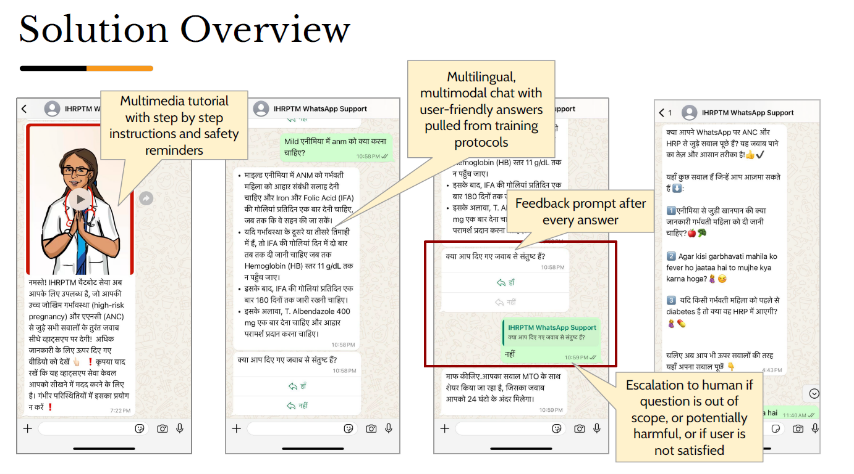
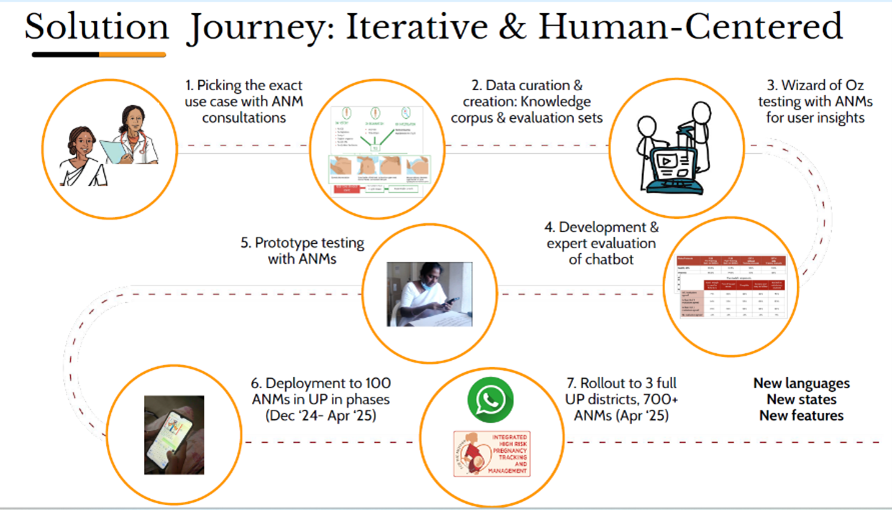
Responses are grounded in validated medical protocols and supported by a human-in-the-loop escalation pathway to ensure safety, accuracy, and contextual relevance for complex or out-of-scope queries. Designed to integrate with government health systems, the solution supports ANMs in applying recommended antenatal care practices, enabling earlier identification and improved management of high-risk pregnancies. During deployment, the assistant resolved approximately 80% of clinical queries without trainer intervention, ensuring scalability while retaining safety through human oversight
Key features of the solution include:
- WhatsApp-based access to instant, protocol-aligned clinical guidance
- Multilingual and multimodal support, including text and audio interactions
- Human-in-the-loop escalation to maintain safety, trust, and clinical reliability
- Bite-sized, continuous learning embedded into day-to-day
Technology Stack
| Tools/ Techniques | Used For | What It Enabled | Category |
|---|---|---|---|
| Turn.io Chatbot | Auxiliary Nurse-Midwives (ANMs) | AI-driven, conversational support for learning and on-the-job clinical guidance via WhatsApp | Commercial |
| ChatGPT-4.0 | Clinical guidance and learning content | Natural language understanding, response generation, and structured text formatting grounded in medical protocols | Commercial |
| OpenAI Whisper | Voice-based interactions | Speech-to-text transcription for audio queries from ANMs | Commercial |
| Sarvam | Multilingual responses | Text-to-speech generation for multilingual audio responses | Commercial |
Key Project Learnings
Armman faced several challenges in the development of the chatbot and adoption in the field which they have mitigated thoughtfully to enable sustainable use at scale.
ANMs lacked timely guidance while managing high-risk pregnancies. Embedding protocol-aligned support within WhatsApp enabled real-time assistance within existing workflows.
Pure automation was insufficient for complex clinical scenarios. A human-in-the-loop escalation model ensured safety while allowing the solution to scale.
Classroom trainings were infrequent and frontline workers faced digital fatigue. Bite-sized learning integrated into routine interactions enabled continuous capacity building without added burden.
Potential for Wider Adaptation
| Sector | Adaptability of the Solution |
| Frontline Service Domains | The approach can be adapted where front line workers need real-time, protocol-based guidance at the point of service. |
See it in Action
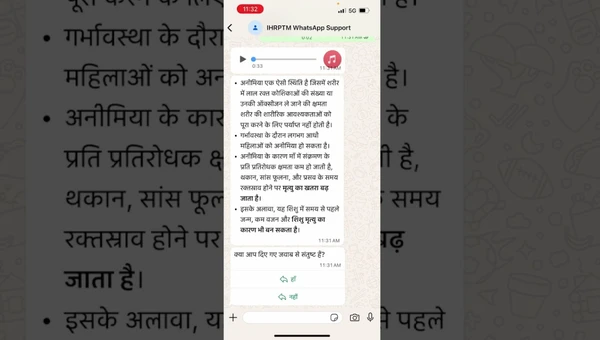
This video introduces Armaan’s high-risk pregnancy chatbot for ANMs, a WhatsApp-based tool that supports continuous learning and on-the-job decision-making. It demonstrates how health workers can ask text or voice-based questions in multiple languages and receive clear, clinically validated, and actionable responses on topics such as anemia, hypertension, and diabetes. The video also highlights features such as audio responses, human escalation within 24 hours when needed, and safeguards that ensure the chatbot responds only within its medical scope.
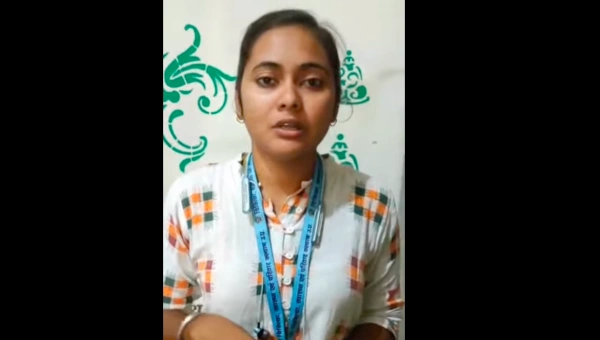
This video features an ANM sharing her experience using a support system chatbot for high-risk pregnancy queries. It demonstrates how health workers can ask questions related to maternal care, receive accurate and satisfactory responses, and rely on a 24-hour escalation system when answers are not immediately available, making it a valuable tool for on-ground decision support.

This video features an ANM sharing her experience using a support system chatbot for high-risk pregnancy queries. It demonstrates how health workers can ask questions related to maternal care, receive accurate and satisfactory responses, and rely on a 24-hour escalation system when answers are not immediately available, making it a valuable tool for on-ground decision support.