
FMCH: Digitising Nutrition for Scalable Impact
How FMCH digitized frontline health workflows using mobile-based systems and dashboards to enable real-time tracking, improve service delivery, and scale maternal and child health intervention

Watch the story in 60 seconds (AI-generated video; visuals are illustrative)
Case at a Glance
FMCH is a public health NGO that focuses on improving maternal and child nutrition during the critical first 1,000 days of life. It delivers direct services and strengthens government systems through evidence-based counselling, tech-enabled tools, and community-based outreach models.
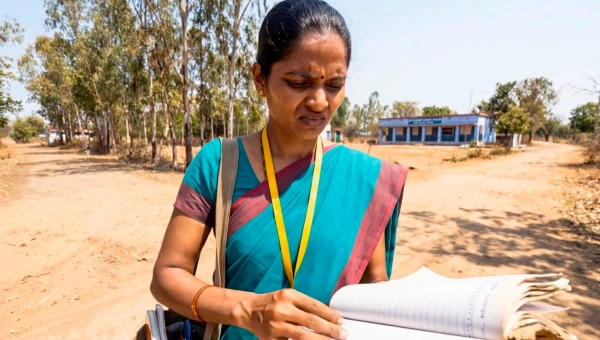
FMCH faced challenges in scaling its nutrition programmes while maintaining quality due to inconsistent counselling, ineffective scheduling, and fragmented data. Field officers lacked standardised tools for follow-ups and prioritising high-risk cases like SAM/MAM, leading to missed critical interventions and limited insights into programme performance.
FMCH developed NuTree, a multilingual mobile app designed to digitise and streamline field operations for frontline workers. NuTree provides structured, protocol-based counselling workflows, intelligent scheduling for high-risk cases, and real-time data entry, enhancing accountability and ensuring consistent, timely care delivery. They also created NuTree Lite for wider adoption by Anganwadi workers within government systems.
FMCH operates in some of the most resource-constrained environments, where field officers serve as the critical bridge between clinical protocols and community care. However, the organisation encountered several systemic and operational challenges that limited its ability to scale impact while maintaining quality:
Together, these issues posed a significant barrier to FMCH’s mission: delivering timely, high-quality, and equitable care to every mother and child. The organisation needed a solution that not only digitised field workflows but truly enabled field workers to do their jobs better with greater precision, efficiency, and empathy.
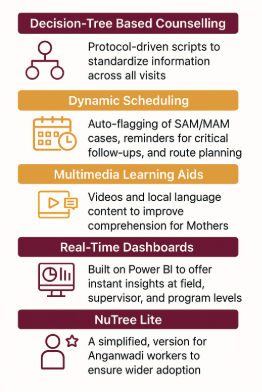
To address these challenges and strengthen service delivery, FMCH developed NuTree, a multilingual mobile application designed to streamline field operations and enhance accountability. The app provided frontline workers with structured, protocol-based counselling workflows, ensuring consistent delivery of health and nutrition information across all visits. Through built-in decision trees and multimedia learning aids, NuTree empowered field officers to tailor communication to each family’s context while maintaining adherence to clinical guidelines.
The platform featured intelligent scheduling tools that prioritised high-risk cases and helped reduce missed visits. Real-time data entry and synchronisation enabled supervisors to monitor progress, review performance, and provide timely support. In addition to its core features, FMCH introduced NuTree Lite, a simplified version tailored for Anganwadi workers, encouraging wider adoption within government systems.
By integrating technology with field-based knowledge, NuTree became a cornerstone of FMCH’s approach to scalable, high-fidelity public health programming.
Solution Roll-Out Approach
FMCH rolled out its digital solution in phased releases, each focused-on building functionality while reinforcing field usability and program integrity.
At each stage, features were tested, observed, and refined in real conditions. Field teams were actively engaged in shaping functionality, ensuring that each release aligned with actual workflows and capacity. FMCH’s approach demonstrated that digital success lies in listening, iterating, and building with and not just for users.
Technology Stack
| Tools/Techniques | Used For | What It Enabled | Category |
|---|---|---|---|
| NuTree App (Android) | Protocol-based workflows, multilingual interface, visit tracking |
Standardized service delivery and real-time monitoring of frontline activities |
Proprietary |
| NuTree Lite | Simplified app for Anganwadi workers |
Increased adoption among low-tech users and expanded field coverage |
Proprietary |
| Microsoft Power BI | Dashboarding and analytics |
Data-driven decision-making at field and program levels |
Commercial |
| Integrated WhatsApp based module for sharing videos and behavioral nudges with communities |
Improved engagement and behavior change among beneficiaries |
Commercial | |
| Glific | AI-driven conversational chatbot for mothers |
Scalable, personalized engagement and support for beneficiaries |
Open-source |
Key Project Learnings
FMCH’s experience with NuTree highlighted how thoughtfully integrated technology can enhance frontline efficiency, accountability, and sustainability of outcomes:
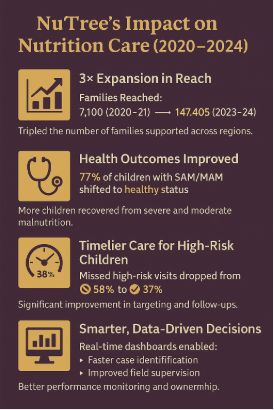
Integrating SAM and MAM guidelines into scheduling allowed field teams to deliver more timely and proactive care.
Real-time visual tools evolved into mentoring aids, driving accountability and informed supervision.
With the right support, even first-time users like Anganwadi workers adopted digital tools with confidence.
Potential for Wider Adoption
NuTree’s flexible design and field-tested success make it well-suited for replication across the development ecosystem:
| Sector / Domain | How this solution adapts |
| Government Systems | Platforms like ICDS, NHM, and POSHAN can integrate similar tools to strengthen frontline delivery and supervision. |
| NGO Field Operations | Organisations can adopt NuTree’s approach to digitise field processes while maintaining a people-first approach. |
| Collaborative Projects | Ideal for multi-partner initiatives requiring shared dashboards, unified data standards, and aligned reporting. |
NuTree has not only scaled FMCH’s impact but also offers a replicable blueprint for tech-enabled, community-driven delivery at scale.