
The Akshaya Patra Foundation: Optimizing Operations to Feed Millions
Revolutionising the world’s largest NGO-run school meal program through a multi-platform digital ecosystem to ensure precision, quality, and systemic efficiency.



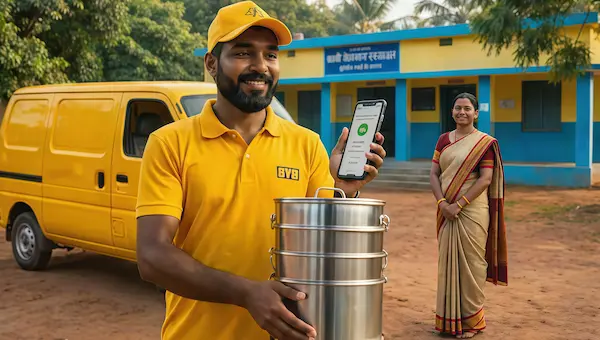
Watch the story in 60 seconds (AI-generated video; visuals are illustrative)
Case at a Glance
The Akshaya Patra Foundation is a leading Indian non-profit dedicated to eradicating classroom hunger. By partnering with the government, it operates high-tech mega-kitchens to provide nutritious, cooked meals to millions of children in government schools daily.
Fragmented, manual supply chain operations hindered real-time visibility into production and logistics. Inaccurate data and inefficient fleet and inventory management threatened meal quality, increased operational costs, and limited the foundation's ability to scale its mission
Akshaya Patra launched "Project Disha" and "Project Poorna," a digital transformation suite centered on a Microsoft Dynamics ERP backbone. The solution integrated cloud infrastructure, custom mobile apps (PowerApps/OS1), and specialized HR/Logistics tools to digitize the end-to-end journey from procurement to the last-mile delivery.
Serving over 2.3 million meals daily across 16 states presents a monumental logistical challenge. Akshaya Patra’s growth was historically constrained by a systemic reliance on manual processes. In the absence of a unified digital architecture, the foundation faced "information silos" where production data, vehicle tracking, and school-level feedback were captured on paper or disparate spreadsheets.
Root causes of inefficiency included:
The foundation adopted a phased, multi-platform approach to transform its core operations:
- The Digital Backbone: Implementing Microsoft Dynamics ERP (D365) provided a centralized source of truth for financial management, procurement, and inventory. This was hosted on Microsoft Azure to ensure high availability across remote geographies.
- Project Disha (Distribution Excellence): Focused on the "last mile." Using PowerApps and OS1, the foundation built custom mobile interfaces for drivers and supervisors. This enabled real-time route optimization, automated fuel balancing, and digital delivery acknowledgments (capturing adequacy and taste feedback instantly).
- Project Poorna (Production Efficiency): Targeted kitchen operations. By digitizing material input times and leveraging IIOT enablement, the platform ensured strict adherence to recipes. Shift leads now use mobile dashboards to monitor production metrics in real-time, allowing for immediate corrective action.
- Stakeholder & Resource Management: Salesforce CRM was integrated to manage donor relationships, while Zing HR automated the lifecycle of the foundation’s massive workforce.
The digital overhaul has redefined Akshaya Patra’s operational ceiling:
Technology Stack
| Tools/Techniques | Where it was used | What it enabled | Category |
|---|---|---|---|
| Microsoft Dynamics (D365) | Core ERP / Backend | Centralized finance, inventory, and procurement management | Commercial |
| Microsoft Azure | Cloud Infrastructure | Scalable hosting and real-time data processing across India | Commercial |
| Salesforce CRM | Donor Management | Real-time visibility into donor partnerships and resources | Commercial |
| PowerApps / OS1 | Frontline Mobile Apps | Guided production input and last-mile delivery tracking | Custom-built |
| Kelsa | Logistics Management | Specialized fleet, fuel, and repair tracking | Commercial |
| Zing HR | HR Management | Automation of the employee lifecycle and payroll | Commercial |
| Mana Dashboards | Management Information and BI Layer | Real-time operational analytics and deviation monitoring | Custom-built |
Key Project Learnings
Digitizing data at the source (drivers and kitchen staff) through simple mobile apps is more effective than back-office data entry for achieving real-time accuracy.
While a robust ERP provides the backbone, specialized "last-mile" tools (like Kelsa or PowerApps) are necessary to handle sector-specific logistical nuances.
Prioritizing "Indenting and Information" before moving to production optimization allowed the organization to build digital literacy incrementally.
Potential for Wider Adoption
| Sector | Adaptability of the Solution |
| Government PDS | Public Distribution Systems can use this model to track grain movement and reduce leakages in last-mile delivery. |
| Disaster Relief NGOs | Large-scale relief organizations can adapt the "Project Disha" framework for rapid, transparent distribution of supplies. |
| Public Healthcare | Can be replicated for medical supply chains (vaccines/medicines) ensuring cold-chain integrity and inventory visibility. |
| Social Enterprises | Small-to-medium social enterprises can adopt the phased ERP-to-Mobile approach to scale operations professionally. |