

Microsoft Azure

Platform for managing apps, data, and infrastructure across cloud environments.

Microsoft Azure is a cloud platform that helps organisations manage applications, data, and infrastructure across cloud and on-premise systems. It brings together services like storage, analytics, AI, and security in one place, making it easier to run and scale digital operations. For nonprofits, it simplifies data management, supports programme delivery, and reduces dependence on complex local IT setups.
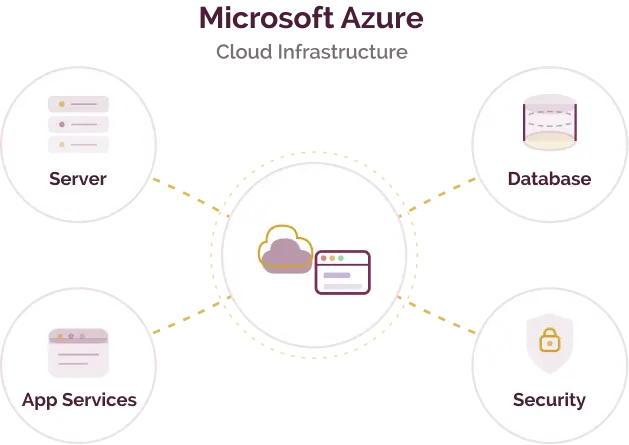
Platform for managing apps, data, and infrastructure across cloud environments.

Infrastructure and integration challenges for nonprofits

Challenge
check

Difficulty managing infrastructure for digital systems across programmes and locations

check

Need to connect existing (on-premise or legacy) systems with cloud-based tools

check

Limited capacity to manage applications, data, and access across teams

Solution
check

Microsoft Azure provides cloud services for running applications, storing and processing data, and connecting systems across cloud and on-premise environments

Key capabilities of Microsoft Azure

Cloud infrastructure (IaaS and PaaS)

Run applications, databases, and backend systems without maintaining physical servers

Hybrid cloud support

Connect on-premise systems with cloud services, allowing gradual transition instead of full migration

Application services

Build, deploy, and manage web, mobile, or backend applications within a managed environment

Data and storage services

Store, organise, and access data across systems using managed databases and storage services

Identity and access management

Control who can access systems and data through user roles, permissions, and authentication

Integration with Microsoft tools

Work with tools such as Microsoft 365 and Dynamics to connect data, users, and workflows

Pricing for nonprofits

Usage-based pricing

  • Pay for compute, storage, and services based on usage
  • Free tier available for selected services
  • Credits and support may be available through Microsoft’s nonprofit programmes

Best suited for which nonprofits?

Organisations using Microsoft tools such as Excel, Dynamics, or Microsoft 365

Teams needing to manage applications or data across multiple locations

NGOs connecting existing systems with cloud services

Frequently Asked Questions

What problem does Microsoft Azure solve for nonprofits?

It helps organisations run applications, manage data, and connect systems across cloud and on-premise environments.

When should a nonprofit use Microsoft Azure?

When there is a need to manage applications, store data, or connect existing systems with cloud services.

Does it require technical expertise?

Yes, managing cloud infrastructure and applications typically requires technical knowledge.

How is it different from AWS or Google Cloud?

Microsoft Azure is commonly used by organisations already using Microsoft tools, as it can be configured to work with those systems.

Is Microsoft Azure free for nonprofits?

It includes a free tier for selected services, and credits may be available for eligible nonprofits, though most services follow a usage-based pricing model.

Want to learn more?

The information provided here is created as a community resource and is not intended as professional advice or a recommendation by ILSS or Koita Foundation. While we strive to ensure the accuracy of the content, we do not take responsibility for any errors or omissions. Users should use their own discretion before making any decisions based on this information. ILSS or Koita Foundation assume no liability for any actions taken based on the information provided.